Nov 16, 2026Supporting SDG Progress in Uzbekistan: 2nd SDSN mission of technical trainings and workshops, 19-22 Oct 2026
Author: SDSN | Published: November 16, 2026
Summary:
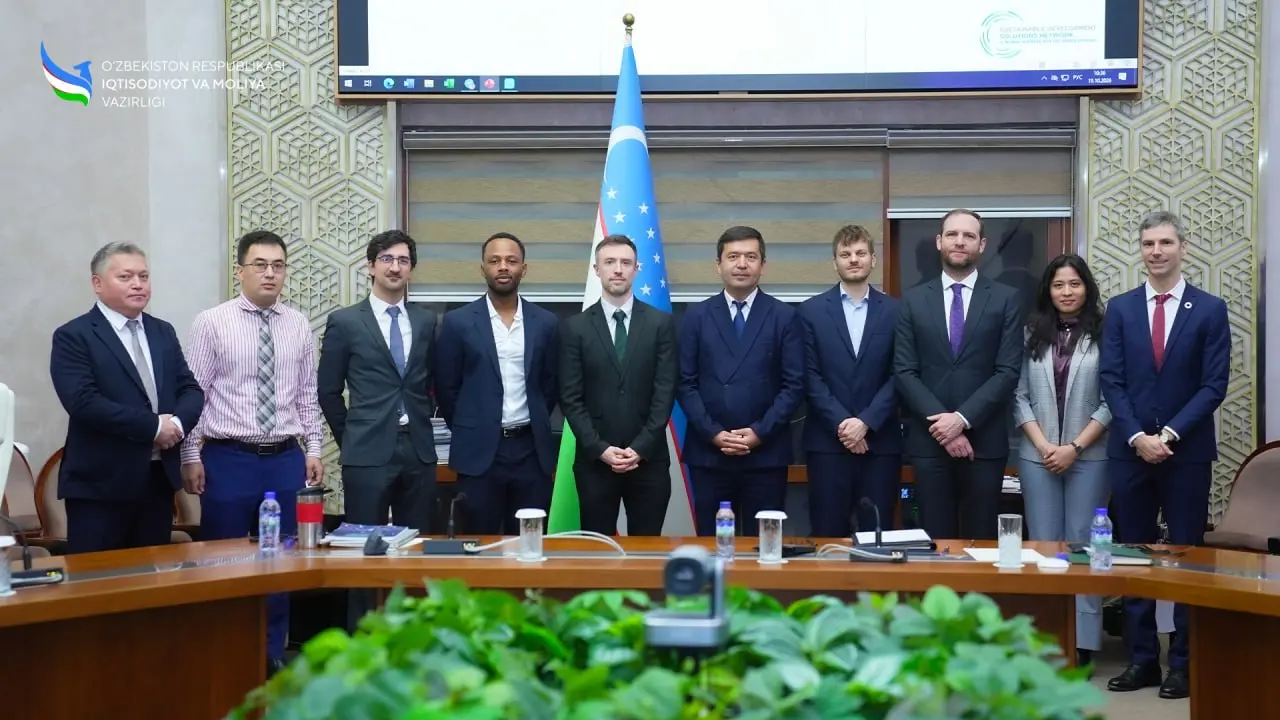
From 19 to 22 October 2026, the UN Sustainable Development Solutions Network (SDSN) conducted its second mission to Uzbekistan, returning to Tashkent for four days of technical workshops, training sessions and presentations at the Ministry of Economy and Finance (MoEF), with the support of the Agence Française de Développement (AFD). The mission aimed to present the key messages of the forthcoming SDSN report, scheduled for publication in November 2026, with particular emphasis on strengthening SDG implementation at the subnational level and aligning national and local development priorities. It also provided an opportunity to explore the development of an Agriculture, Forestry and Other Land Use (AFOLU) pathway grounded in Uzbekistan's national commitments and policy framework. The visit marked an important milestone in the two-year collaboration between SDSN, the MoEF and AFD, showcasing the initial results of this partnership and culminating in the official launch of SDSN Uzbekistan, the newest national network within the global SDSN community. Participants included representatives from UNDP, the UN Resident Coordinator’s Office, the National Statistics Committee, the Ministries of Transport, Health, and Agriculture, the Center for Economic Research and Reforms (CERR), SDSN Uzbekistan’s co-host institutions, and several leading universities.
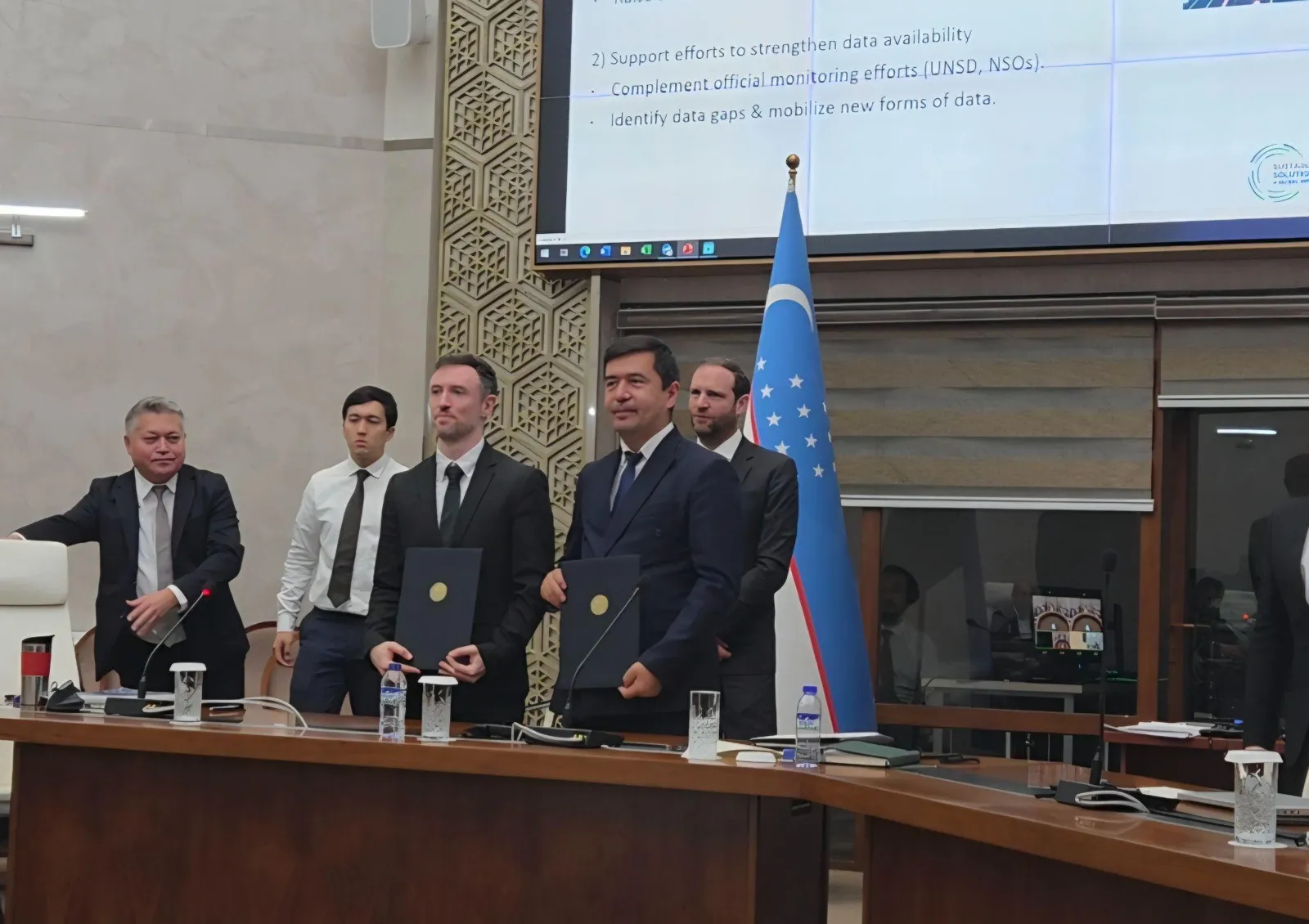
Guillaume Lafortune and Deputy Minister Umid Abidkhadjaev sign MoU for the launch of SDSN Uzbekistan
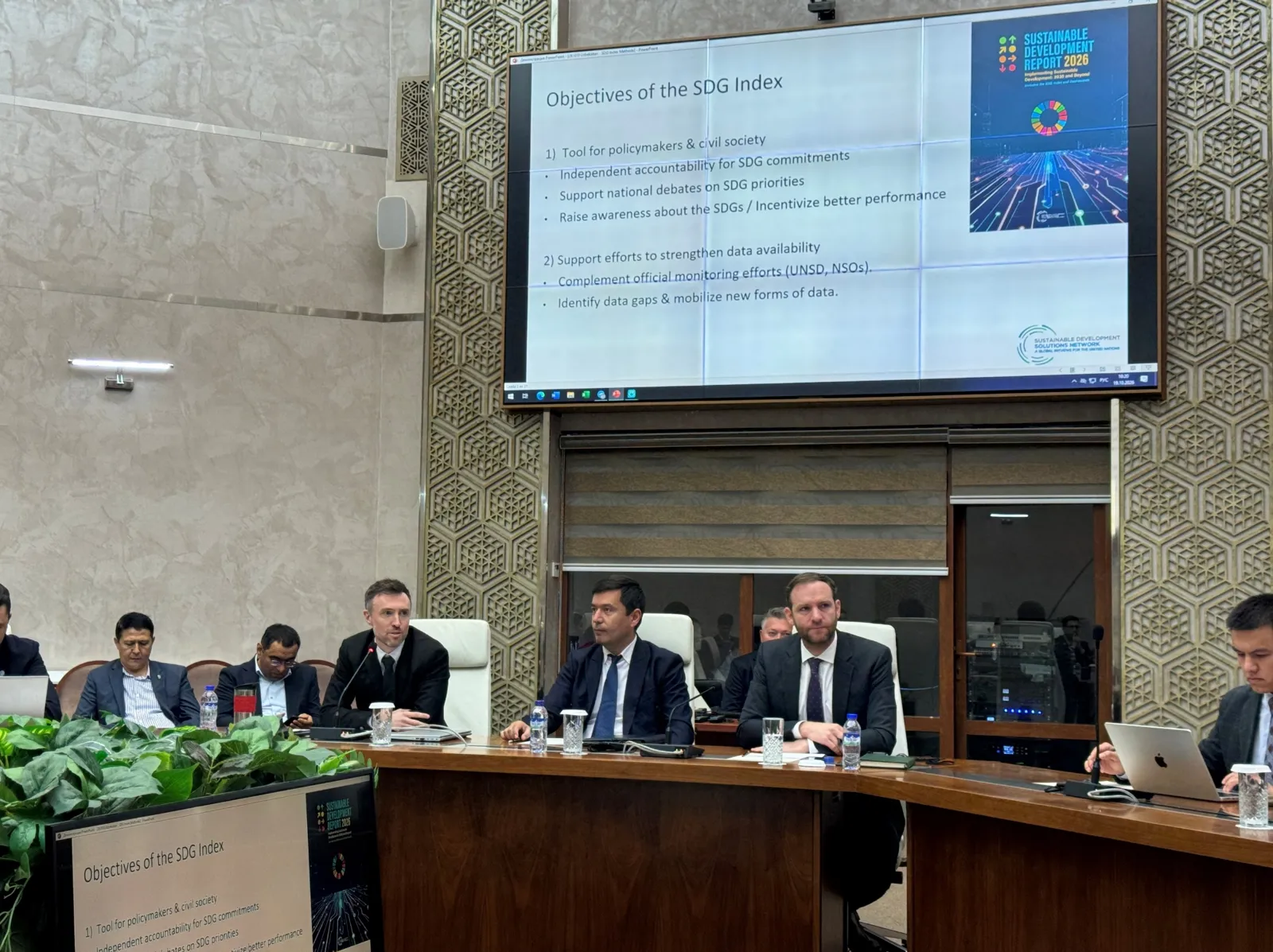
Guillaume Lafortune, Deputy Minister Umid Abidkhadjaev, and Olivier Grandvoinet (AFD) deliver opening remarks.
Mission Activities:
Day 1: 19 October 2026
Opening Remarks
The workshop opened with remarks from Deputy Minister Umid Abidkhadjaev (Ministry of Economy and Finance of Uzbekistan), Mr. Olivier Grandvoinet (AFD) and Dr. Guillaume Lafortune (Vice President, SDSN). They reflected on Uzbekistan’s efforts to advance sustainable development and on the progress achieved through the project collaboration.
The opening remarks also featured the signing of a Memorandum of Understanding (MoU) between Dr. Umid Abidkhadjaev, Deputy Minister of Economy and Finance, and Dr. Guillaume Lafortune, SDSN Vice President & Head of Asia Office, formalizing the launch of SDSN Uzbekistan. Dr. Abidkhadjaev also serves as the SDSN Uzbekistan Network Co-Chair.
Technical discussion on Uzbekistan’s SDG progress
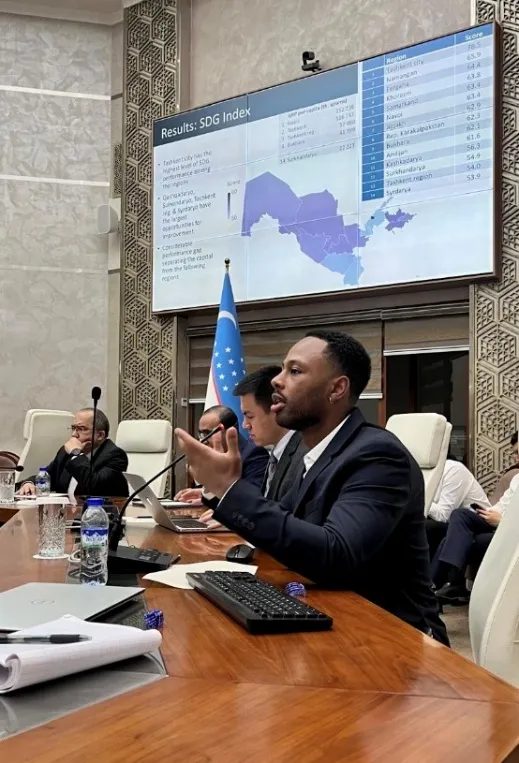
In the morning session, Grayson Fuller (Head of SDG Index, SDSN) presented the indicators compiled for the subnational SDG Index for Uzbekistan’s 14 regions, provided a training on SDG Index methods, and ended with an open discussion of the main findings of the SDG analysis and their policy implications.
Discussion centered on three policy priorities:
- Accelerate convergence between regions, in terms of both socio-economic development (the gap between Tashkent city and the Southern/Western regions) as well as clean energy production (priorities for Sirdaryo, Tashkent Region, and Navoi).
- Strengthen subnational SDG monitoring, especially on SDG 10, where no measures of intra-regional inequality currently exist, as well as SDG 4 (secondary education), SDG 5 (women’s participation in decision-making bodies), and SDG 7 (renewable energy consumption and production).
- Regionalize SDG strategies and accountability mechanisms, notably through Voluntary Local Reviews (VLRs) at the regional level.
The next steps will focus on finalizing the report by incorporating the feedback and priorities identified during the training and workshop. This will involve updating the socio-economic data, integrating additional indicators on multidimensional poverty and women's workforce participation, and further examining regional performance to better understand the underlying factors behind weaker results.
In parallel, SDSN will explore opportunities to support the national uptake of the findings. In particular, the report and underlying database will be shared with the Institute for Regional and Macroeconomic Studies (IRMS) to inform the preparation of Uzbekistan's 2027 Voluntary National Review (VNR) and potentially contribute to the development of a Voluntary Local Review (VLR), starting with the Jizzakh region. These efforts will help strengthen the use of the analysis in national and subnational policy processes.
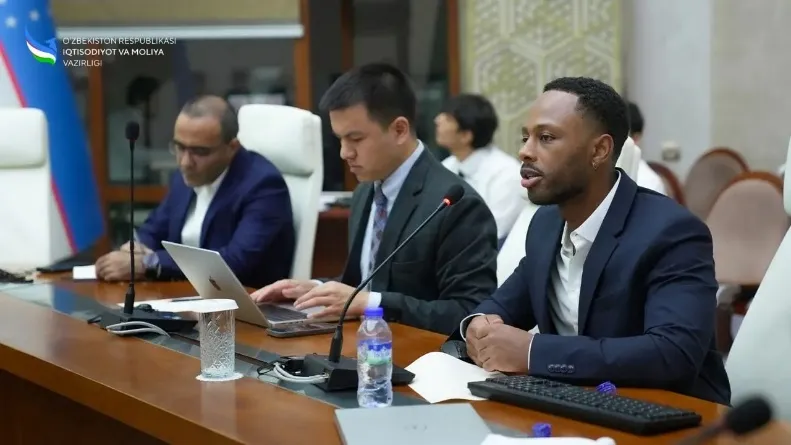
Grayson Fuller (SDSN) presents the subnational SDG Index for Uzbekistan
Calculating SDG 15.3.1 (Land Degradation) with QGIS and Trends.Earth
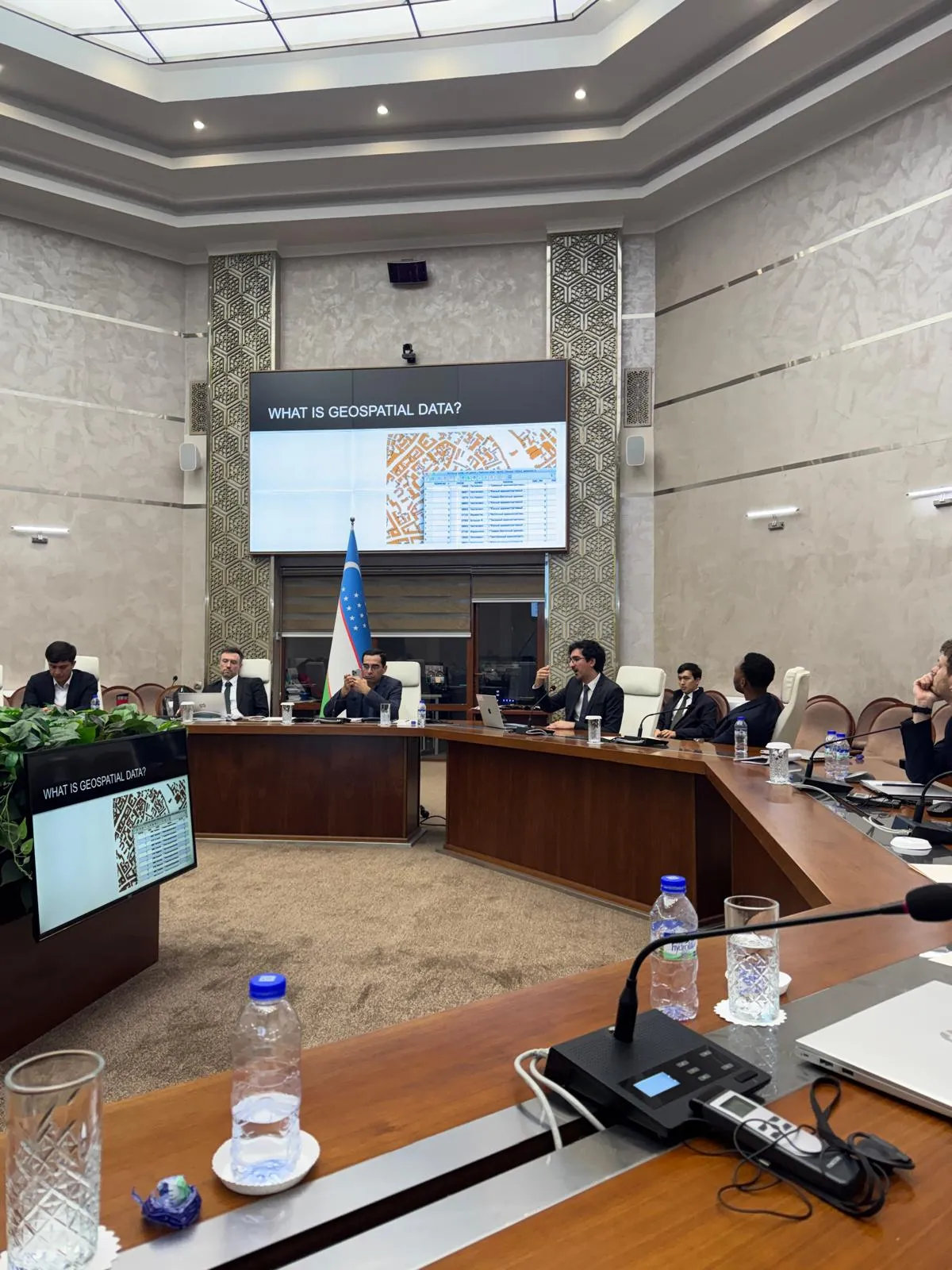
In the afternoon session, Guilherme Iablonovski (Senior Geospatial Data Scientist, SDSN) delivered trainings on GIS at the Ministry of Economy and Finance. The first part presented the geospatial SDG indicators produced for the Uzbekistan Sustainable Development Report: walking accessibility (SDG 11.2.1), the Rural Access Index (9.1.1), land use efficiency (11.3.1), Key Biodiversity Area coverage (15.1.2), greenhouse gas emissions (13.2.2), and land degradation (15.3.1). It closed with a slot on policy implications and potential improvements. The second part was hands-on, including an introduction to GIS and remote sensing, and a showcase of six QGIS-based exercises, from basic data handling and NDVI calculation to computing SDG 15.3.1 with the Trends.Earth plugin and extracting degraded land per region with zonal statistics.
The discussion also focused on identifying key policy implications and priority areas for further consideration, drawing on the Ministry’s contributions, which highlighted four key priorities. First, water-related ecosystem monitoring should distinguish natural ecosystems from irrigation infrastructure and align with the new Water Code and Presidential Decree UP-99. Second, satellite-based built-up area monitoring should feed into urban master plans and the cadastral system. Third, it is important to analyze regional emissions alongside sectoral contributions and GRP carbon intensity, since emissions are attributed to the regions hosting national power facilities. Fourth, protected-area expansion should target Key Biodiversity Areas with low coverage, in line with the 12% target for 2028, and be paired with assessments of management effectiveness.
The proposed next steps include the validation of satellite-derived land degradation estimates against national data on soil salinity, pasture degradation and erosion. A second phase of the project was proposed to advance this work in collaboration with the National Statistics Committee and the Ministry.
Guilherme Iablonovski delivers training on GIS data.
SDSN Uzbekistan: Mobilizing Knowledge Institutions in Uzbekistan for the SDGs and the Paris Climate Agreement
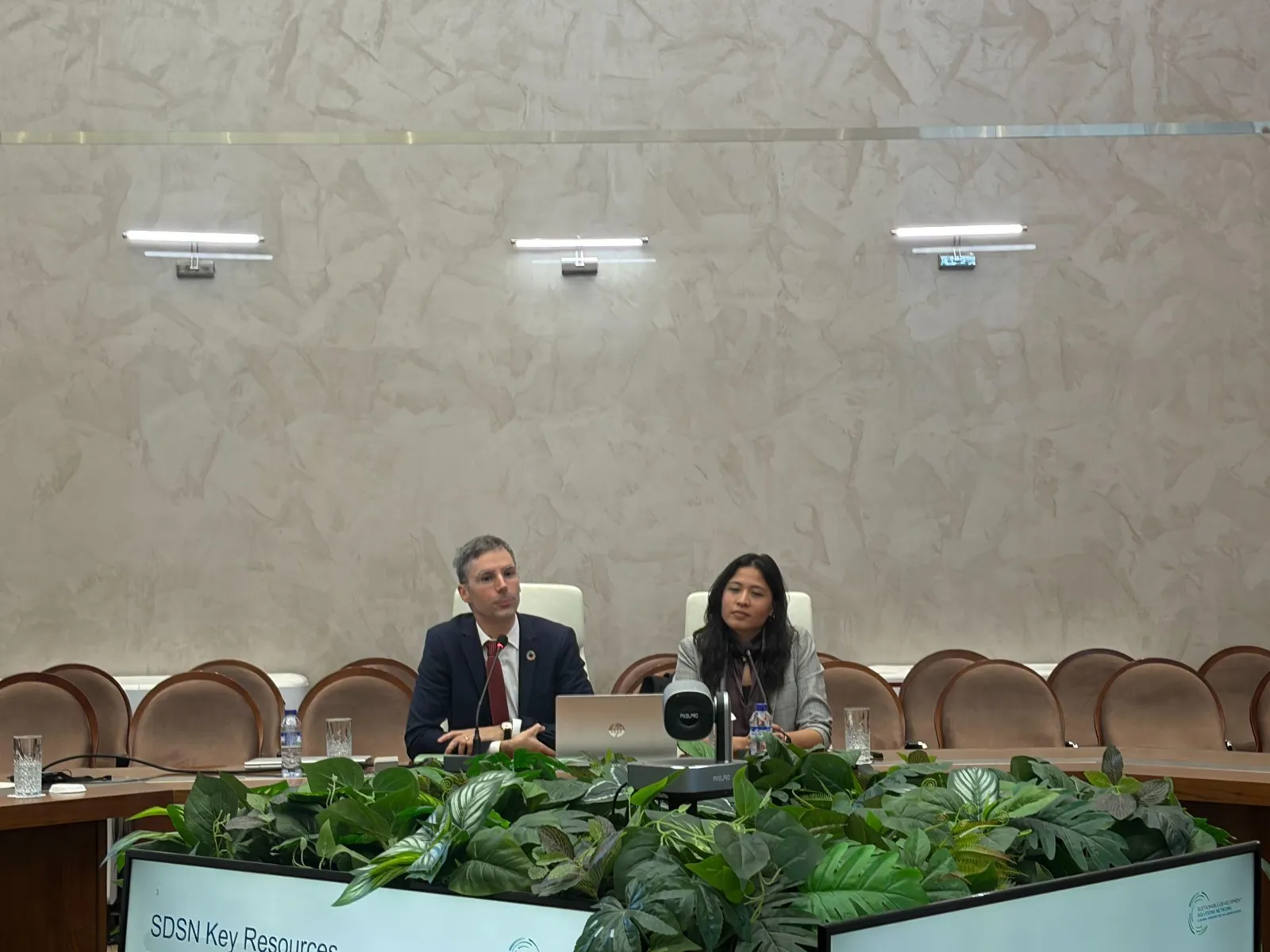
This session was jointly presented by members of the SDSN Secretariat and the newly appointed Network Managers of SDSN Uzbekistan. The SDSN Network Secretariat opened with an overview of SDSN and its global network, covering its strategy, key focus areas, global presence, team, and various programmes and initiatives. This was followed by an update on the progress made by the global and local Secretariats towards establishing the SDSN Uzbekistan network. The session concluded with a sharing of notable work and focus areas of the SDSN Kazakhstan network - the first national SDSN network established in Central Asia.
The floor was then handed over to Ms. Naylya Ibragimova (IMRS) and Mr. Odilbek Manabov (UWED), the Co-Network Managers of SDSN Uzbekistan, who shared the vision and upcoming activities/plans for the network. In addition to the upcoming conference launch event scheduled for November 4–5, there are plans to establish the local leadership council and form thematic working groups covering areas such as natural resources, water and ecosystems, energy and climate decarbonization, human capital and social inclusion, economic transformation, and finance, among others.
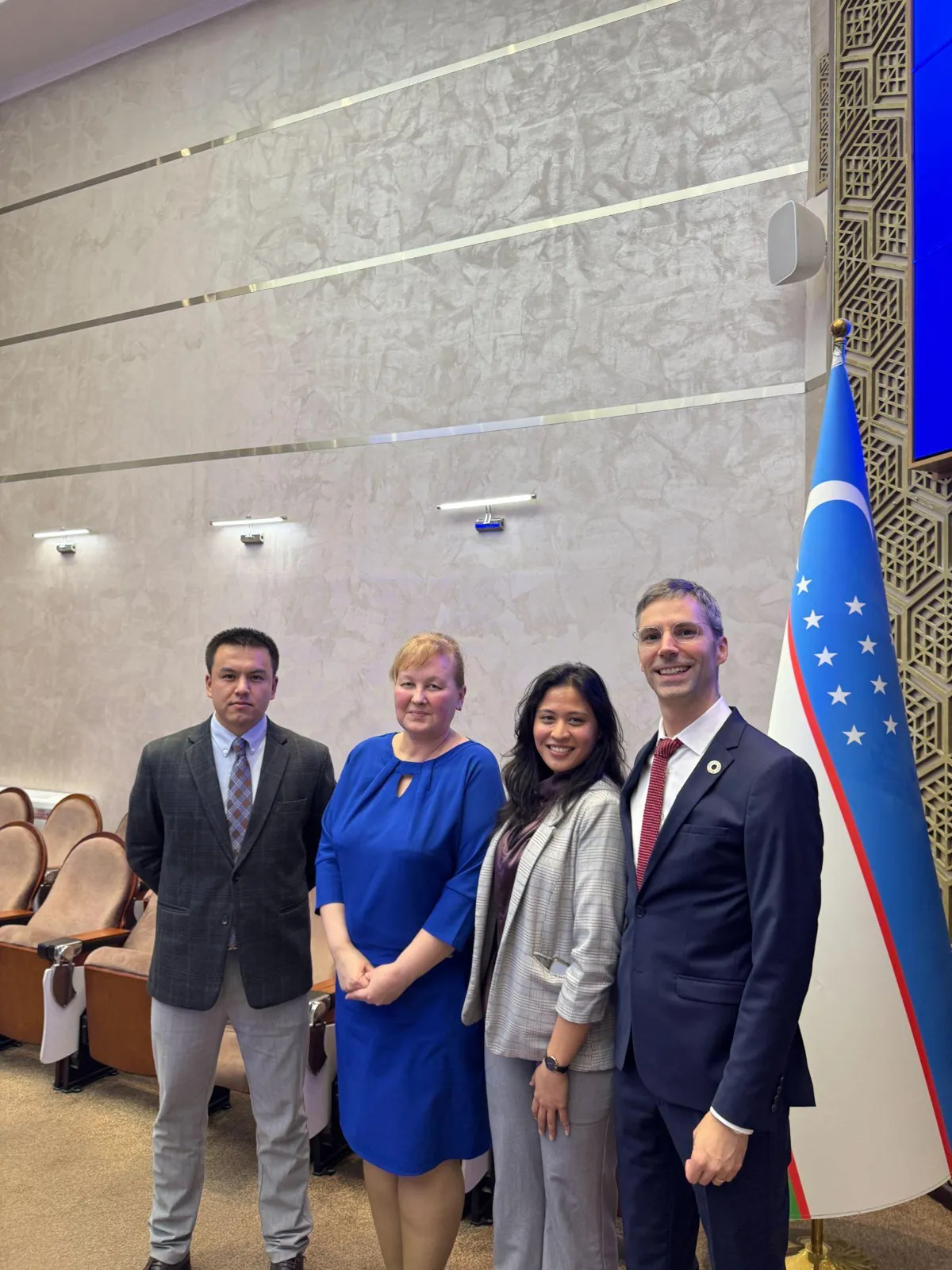
SDSN Networks Team with SDSN Uzbekistan co-Network Managers
Day 2: 20 October 2026
Long-term pathways for sustainable agri-food systems
During this workshop, presentations on food and land use system pathways, based on national commitments and policies, were provided by Mr. Davide Cozza (SDSN), Dr. George Safonov (IDDRI) and Dr. Abdurashid Bozorov (CERR)
Meeting highlights:
- Mr. Davide Cozza: The presentation highlighted the challenges of reducing emissions under a mitigation pathway based on existing national policies, primarily due to two factors:
- Increasing food demand: Driven by population growth, which is expected to peak around 2050, and a shift towards a more diversified diet, with higher consumption of fruits, vegetables, pulses and nuts compared to 2020. However, red meat consumption is projected to remain almost unchanged, while milk consumption is expected to decrease only slightly. Overall, daily per capita calorie intake remains high, contributing to sustained pressure on agricultural production.
- Limited carbon sequestration potential: Due to the relatively low carbon content of forests and other land categories, including shrubs and sparse vegetation. These land categories are expected to expand partly because of agricultural land abandonment, but their contribution to carbon sequestration remains limited.
As a result, AFOLU emissions are projected to decrease by only 5% between 2020 and 2050.
Next steps will focus on strengthening collaboration with CERR to support the use of the FABLE Calculator and refine the pathway based on national data and assumptions
- Dr. George Safonov (IDDRI): Highlighted several mitigation strategies, including agroforestry, which is also being explored in other countries in the region, such as Kazakhstan.
- Dr. Abdurashid Bozorov (CERR): Presented a national pathway that places particular emphasis on reducing daily per capita calorie intake from nearly 4,000 kcal to approximately half that level by 2070. The pathway also envisages increased productivity for both crops and livestock, with a particular focus on livestock production. A major constraint on livestock productivity is the fragmented structure of the sector, characterized by small-scale, low-productivity farms. The development of larger-scale farms in the coming years is seen as a potential solution for improving productivity and enabling more substantial gains across the sector. CERR also highlighted the need to identify other effective policy solutions to increase livestock productivity while addressing soil degradation in Uzbekistan. Soil degradation and salinization are closely linked to irrigation challenges and water scarcity.
Day 3: 21 October 2026
Site Visit in Samarkand
This was a full day of site visits at Samarkand.
Day 4: 22 October 2026
Stakeholder Meetings
Meetings were held with representatives from the Ministry of Agriculture, including experts in soil degradation and food security and nutrition, as well as with Westminster International University to explore potential areas of collaboration with SDSN/FABLE.
Organizer and participants: Ministry of Economy and Finance, SDSN delegation, four representatives of the Ministry of Agriculture, two members from the Westminster International University.
Meeting highlights:
- Meeting with four representatives of the Ministry of Agriculture (including experts in soil degradation, food security, and nutrition): Mr. Davide Cozza presented a mitigation pathway based on Uzbekistan’s existing national policies and introduced participants to the main functionalities of the FABLE Calculator. Participants expressed interest in exploring its potential applications, including possible links with a model currently under development on food security and nutrition. They also highlighted opportunities for collaboration with CERR which is interested in establishing a national FABLE team. As a next step, Mr. Cozza agreed to share the FABLE collaboration framework and further information about the Consortium.
- Meeting with two representatives of Westminster International University in Tashkent (including Dr. Mukhammadfoik Bakhadirov): Participants expressed interest in further engagement with the FABLE team on SDG-related topics (especially on SDG 2 (Zero Hunger)) and in exploring opportunities for collaboration, including through the University’s research activities and potential involvement in the FABLE Consortium. Follow-up will focus on sharing information about the Consortium and its collaboration framework, and exploring potential partnerships with relevant university research centres and institutions, such as the Centre for Policy Research and Outreach (CPRO) and Westminster International University in Tashkent.
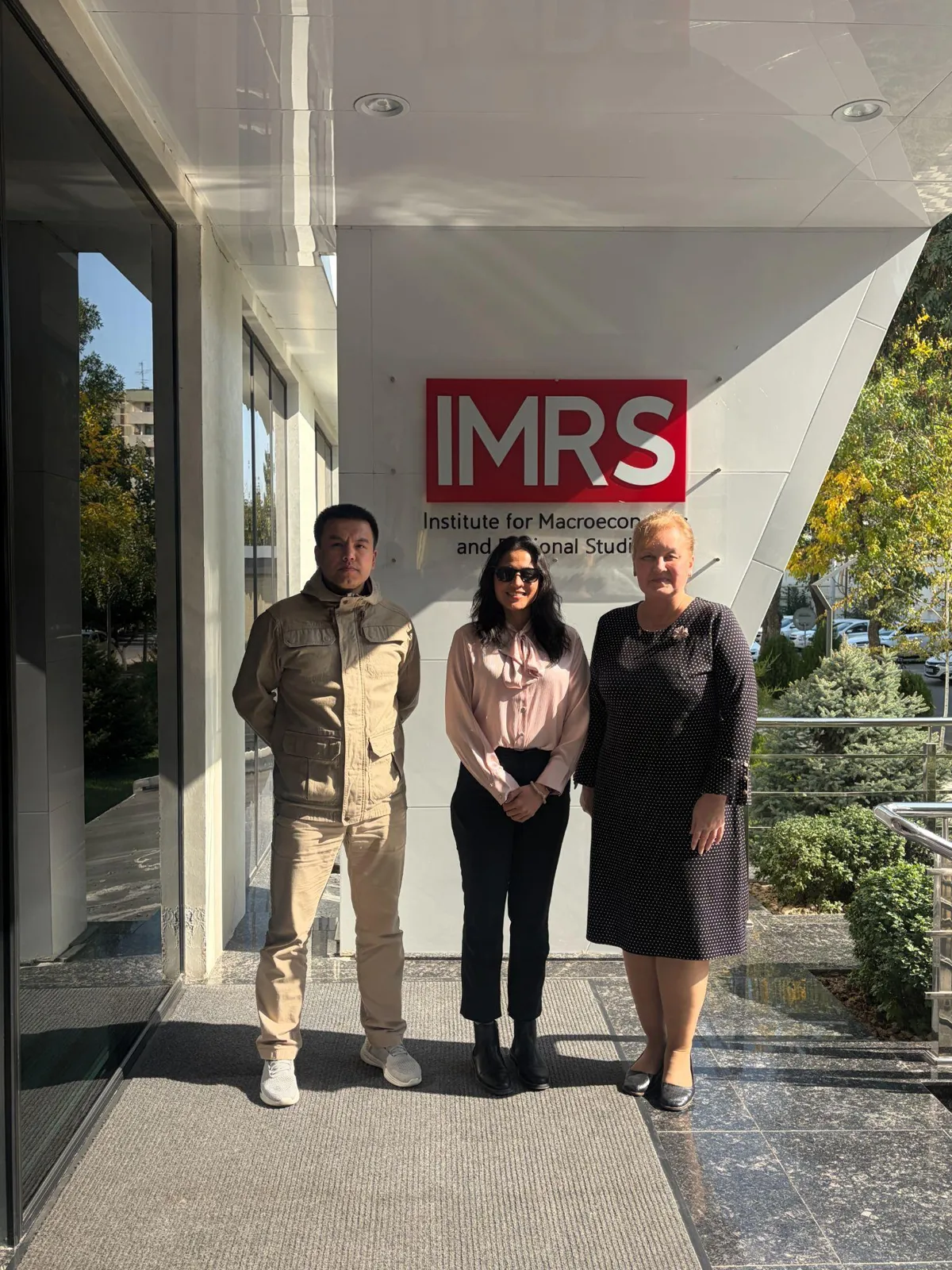
On the same day, a meeting was also held at IMRS between the SDSN Uzbekistan co-Network Managers and Dr. Bakhtishod Khamidov, Co-Managing Director of SDSN Uzbekistan from IMRS. The discussion covered the network’s overall strategy, preparations for the upcoming conference on November 4–5, 2026, progress towards establishing the Local Leadership Council, and other key matters related to the network’s governance and operational set up. Additionally, the Secretariat focal point also successfully conducted the final two onboarding sessions (capacity building training) with both co-Network Managers.
SDSN meets with the National Statistics Committee
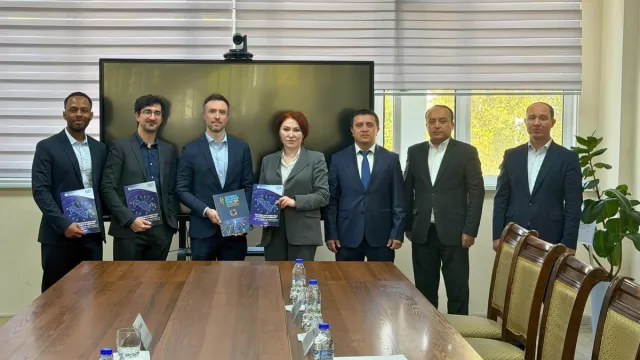
SDSN’s Director of Networks and Asia Pacific Lead for Networks.
=
SDSN Secretariat visits co-host institution IMRS
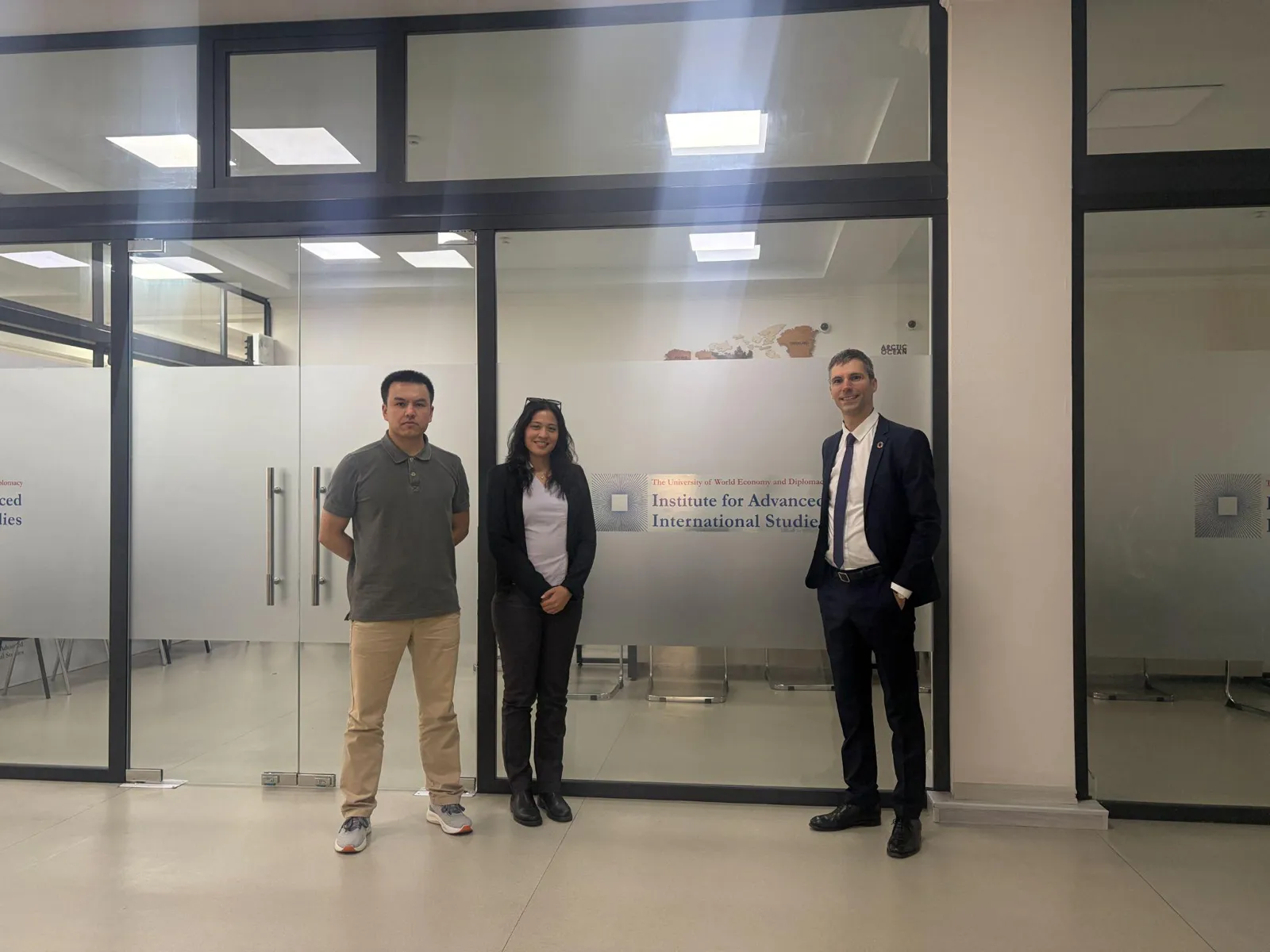
SDSN Secretariat visits co-host institution UWED
Meeting and visit to IMRS with SDSN Uzbekistan co-Network Managers and co-Managing Director
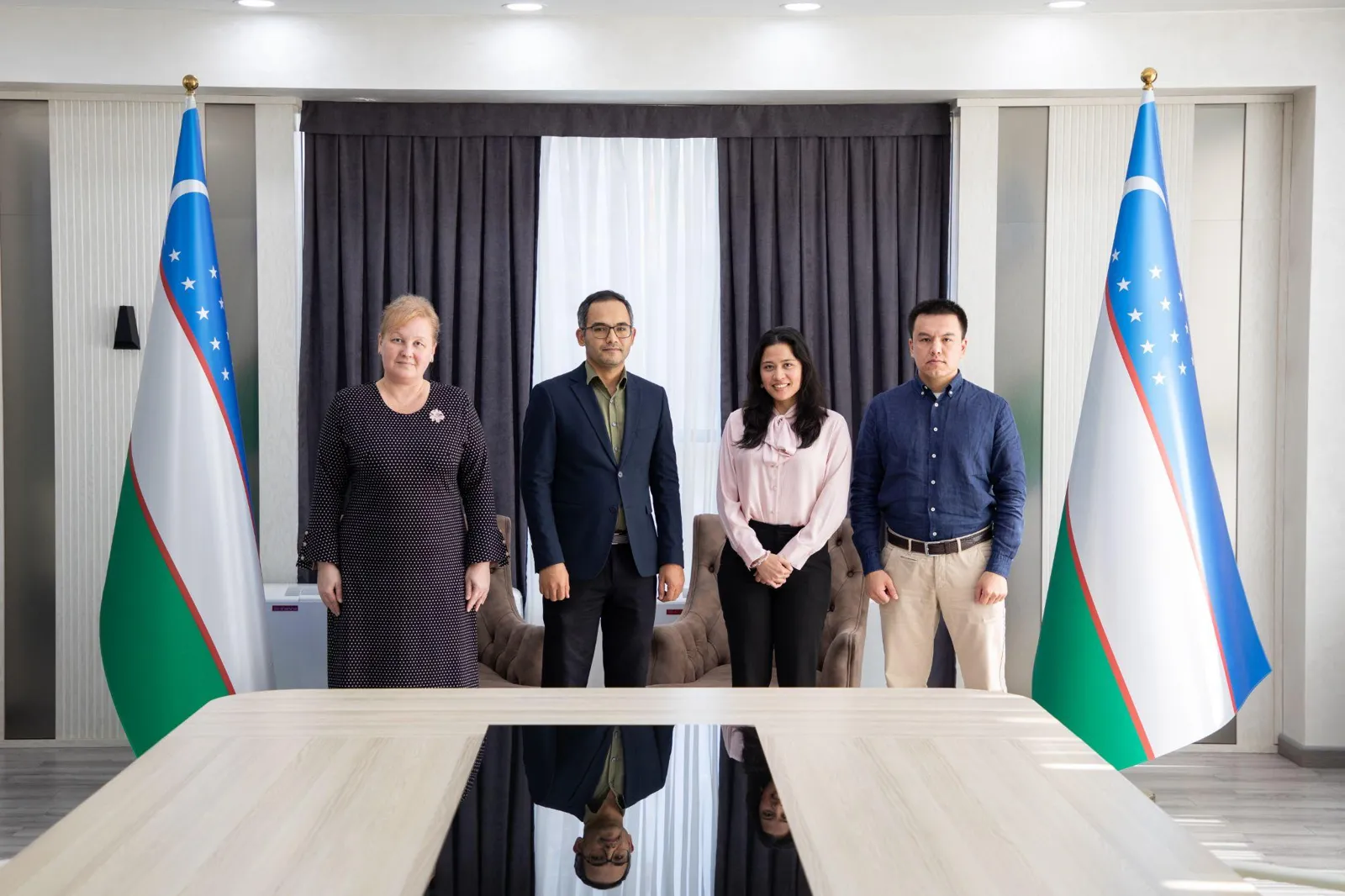
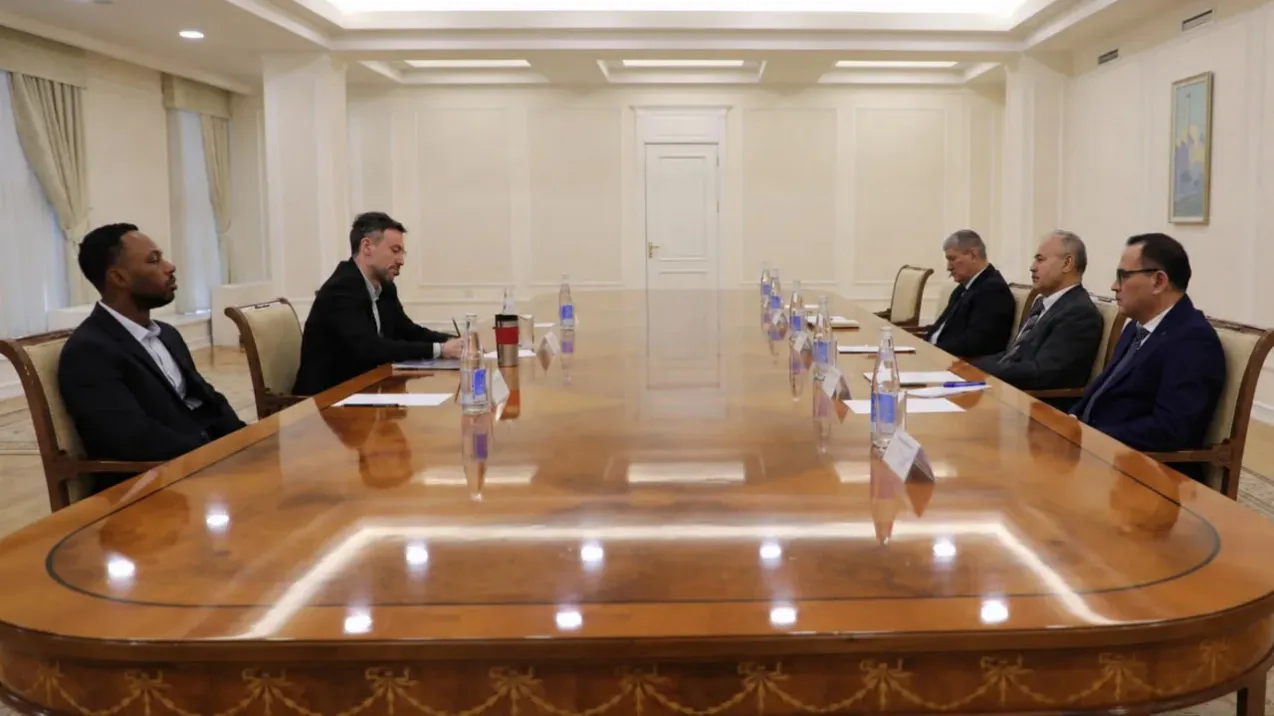
Meeting between SDSN delegation and Agency for Strategic Development and Reform (ASDR) under the President of the Republic of Uzbekistan
https://asdr.uz/en/news/prospects-for-cooperation-with-sdsn-discussed
Full Mission Agenda - SDSN Mission to Uzbekistan, 19-22 October 2022
October 19 — Opening & Workshop Sessions
Morning Session
9:30–10:00 — Opening Remarks (MoEF, AFD, SDSN)
Speakers:
- Dr. Umid Abidkhadjaev, Deputy Minister of Economy and Finance (10mins)
- Mr. Olivier Grandvoinet, Director of AFD Tashkent office (10mins)
- Dr. Guillaume Lafortune, Vice President & Head of Asia Office, SDSN (10mins)
10:00–12:00 — Technical discussion on Uzbekistan’s SDG progress
10:00 – 10:45 Technical results for Uzbekistan Sustainable Development Report
- Presentation of Draft Results
- Open Discussion of Policy Implications
- Presentation of Data Visualization Tool
10:45 – 11:00 Break
11:00 – 12:00 Measuring SDG gaps: Workshop on the SDG Index methodology
- Data / Indicator Selection / Normalization / Aggregation
- Dashboards and Trends
- Q & A
Speakers: Mr. Grayson Fuller (SDSN)
Lead Team: SDSN SDG Transformation Center
12:00–13:30 — Lunch Break
Afternoon Parallel Sessions
13:30–18:00 — Workshop 1
Calculating SDG 15.3.1 (Land Degradation) with QGIS and Trends.Earth
13:30 - 14:30 Remote Sensing Fundamentals
An introductory presentation covering the basics of remote sensing and why it is central to calculating the three sub-indicators of SDG 15.3.1: land cover change, land productivity dynamics, and soil organic carbon.
14:30 - 15:00 Practical Session 1: Installing and Setting Up Trends.Earth
Hands-on installation of the Trends.Earth plugin in QGIS, create an account, connect to the platform, and define the area of interest (select a country or upload a custom shapefile).
16:00 – 16:15 Break
16:15 – 17:45 Practical Session 2: Calculating the Sub-Indicators and Final Indicator
Step-by-step calculation of the three sub-indicators and the aggregated SDG 15.3.1 indicator, using a defined baseline period and reporting period, including how to apply a custom land cover transition matrix and how to include the progress period for comparison against the baseline.
17:45 – 18:00 Wrap-up & Q&A
Speakers: Mr. Guilherme Iablonovski (SDSN)
Lead Team: SDSN SDG Transformation Center
13:30–16:30 — Workshop 2
SDSN Uzbekistan: Mobilizing Knowledge Institutions in Uzbekistan for the SDGs and the Paris Climate Agreement
13:30 – 14:30 Intervention from the SDSN Network Secretariat
The SDSN Network Secretariat will present the progress made to date in establishing the SDSN network in Uzbekistan, walking through the process undertaken and the milestones achieved so far. This will be followed by a look at some of the highlights from across the wider SDSN network and SDSN programs, alongside an open offer to collaborate.
The SDSN Network Secretariat will also outline the next steps in its partnership and support to the newly established network secretariat - including onboarding, peer exchange calls, and joint fundraising efforts.
Speakers: Mr. Andrija Erac (SDSN Network Secretariat), Ms. Amirah Majid (SDSN Network Secretariat)
Lead Team: SDSN Network Secretariat
14:30 – 14:45 Break
14:45 – 15:45 Intervention from Institute for Macroeconomic and Regional Studies (IMRS) and University of World Economy and Diplomacy (UWED)
The co-host institutions, representatives from IMRS and UWED, will share their intentions for the network's first months of activity - including membership mobilization and flagship events.
Co-Chairs of SDSN Uzbekistan are:
- Mr. Sodiq Safoyev, Rector of University of World Economy and Diplomacy (UWED)
- Dr. Umid Abidkhadjaev, Director of the Institute for Macroeconomic and Regional Studies (IMRS) and Deputy Minister of Economy and Finance of Uzbekistan
Managing Directors of SDSN Uzbekistan are:
- Dr. Bakhtishod Khamidov, Deputy Director of the Institute for Macroeconomic and Regional Studies (IMRS)
- Dr. Akram Umarov, Vice-rector of the University of World Economy and Diplomacy (UWED)
Network Managers Uzbekistan are:
- Dr. Naylya Ibragimova, Head of Project at the Institute for Macroeconomic and Regional Studies (IMRS)
- Mr. Odilbek Manabov, Senior Research Fellow at the Institute for Advanced International Studies under the University of World Economy and Diplomacy (UWED)
15:45 - 16:30 Open Discussion
Lead Team: SDSN Network Secretariat & SDSN Uzbekistan
October 20 — Workshop Sessions
Morning Session
09:30–13:00 — Workshop 3 – Long-term pathways for sustainable agri-food systems
9:30 - 10:00 Welcoming of participants
10:00 - 10:30 Presentation of food and land pathways
10.30 - 11:00 Q/A session
11:00 - 11:15 Break
11:15 - 11:30 DDP challenges in Uzbekistan
11:30 - 12:10 CERR presentation
12:10 - 13:00 Discussion with participants
Speakers: Mr. Davide Cozza (SDSN); Dr. George Safonov (IDDRI); Dr. Abdurashid Bozorov (CERR)
Lead Team: SDSN FABLE Secretariat, IDDRI, CERR
13:00–15:30 — Lunch Break
Afternoon Session
15:30–17:30 — Workshop 4 – Practical training on FABLE Calculator
15:30-16:20 Excel basics to handle the FABLE-C
16:20-16:30 Break
16:30-17:30 Scenario implementation and analysis in the Uzbekistan FABLE-C
Speakers: Mr. Davide Cozza (SDSN)
Lead Team: SDSN FABLE Secretariat
October 21 — Site Visit in Samarkand
10:10 - 13:00 Departure from Tashkent to Samarkand
10:30 - 13:00 Visit to Samarkand’s main historical and cultural landmarks, including Gur-e-Amir Mausoleum and Registan Square
13:00 - 14:00 Lunch
14:00 - 17:00 Continuation of the sightseeing program in Samarkand, including Bibi-Khanym Mosque, Siab Bazaar, Shah-i-Zinda Complex and Ulugh Beg Observatory
18:10 Departure from Samarkand to Tashkent
20:30 - 21:00 Arrival in Tashkent and transfer to the hotel
21:00 - 22:30 Dinner hosted by the Ministry of Economy and Finance
October 22 — Stakeholder Meetings & Departure
09:00 - 13:00 Bilateral meetings between the SDSN delegation and its partners in Uzbekistan, including:
- Institute for Macroeconomic and Regional Studies;
- National Statistics Committee;
- Centre for Economic Research and Reforms.
13:00–14:30 — Lunch Break
14:30 – 18:00 Bilateral meetings between the SDSN delegation and its partners in Uzbekistan, including:
- Centre for Strategic Development and Reforms;
- University of World Economy and Diplomacy;
- Westminster International University in Tashkent;
- Turin Polytechnic University in Tashkent.